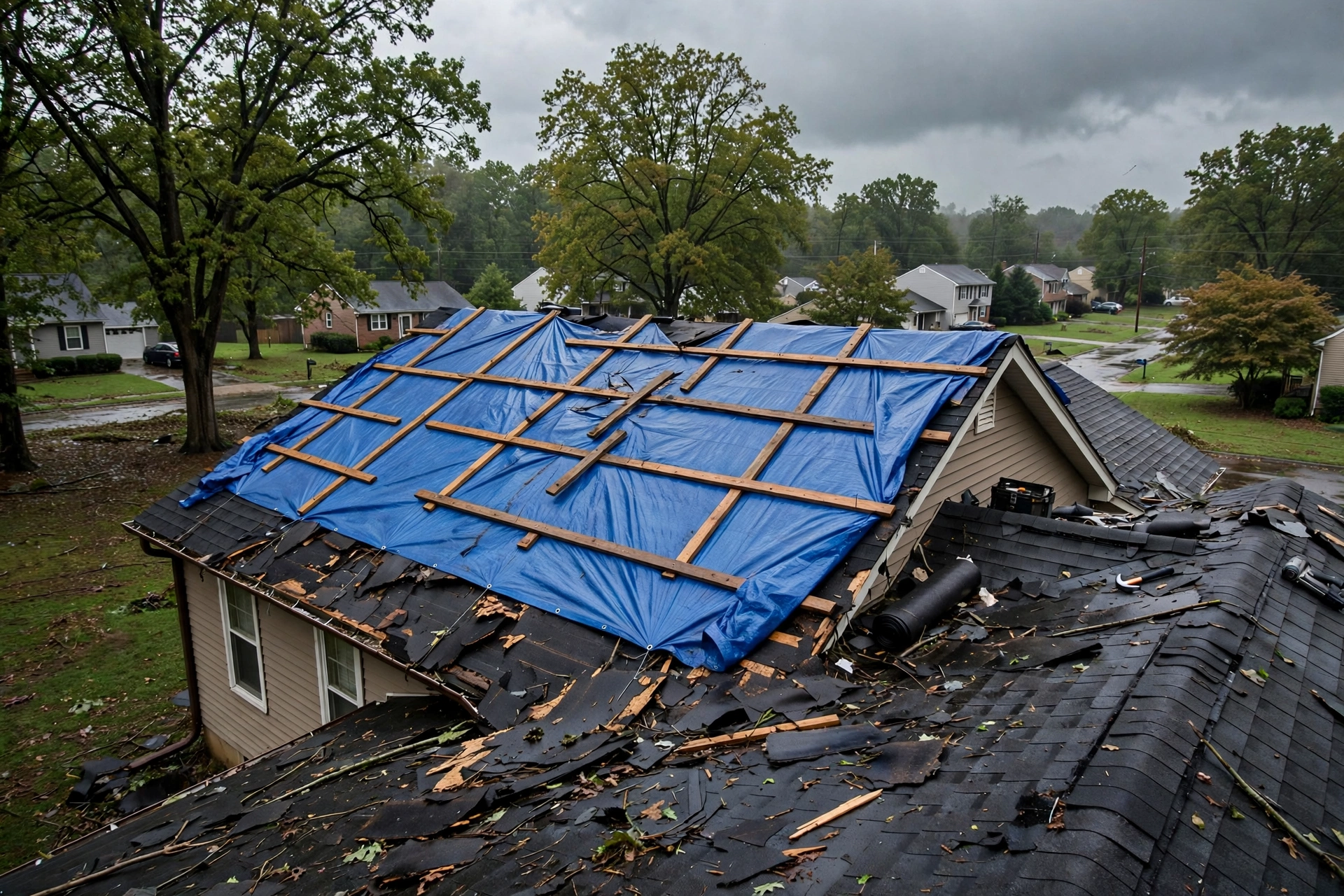
A storm-damaged roof can't wait for a repair crew — the next rain is already on its way. Emergency tarping is the stopgap that keeps a bad situation from becoming a disaster: a properly secured tarp over the damaged section keeps water out of your decking, insulation, and framing while the full repair is scheduled.
We tarp correctly, not hopefully. That means the right tarp for the damage, secured to solid structure — not just draped over loose shingles — with edges sealed so wind can't peel it back. A bad tarp job fails in the next storm and lets water in exactly where the damage already is. We also photograph everything before and during the tarp installation, which gives you dated documentation of the damage for your records.
If your State College roof is exposed right now — missing shingles, a hole from a limb, decking showing — call (555) 123-4567. Tarping buys your roof the time it needs.
Your roof needs tarping when
- Shingles are missing and decking or underlayment is exposed
- A limb punched through the roof surface
- Water is actively coming in and the storm has passed enough to work safely
- Flashing is torn away around a chimney, vent, or valley
- A large section of shingles is lifted or creased by wind
How we tarp your roof
1 Assess from safety
We evaluate the damage from the ground, ladders, and the attic first — never walking a roof that's structurally compromised. The tarp plan follows the damage, not the other way around.
2 Document the damage
Before anything is covered, we photograph the damage thoroughly — close-ups and wide shots, dated. This is your record of what the storm did, before any repair changes the evidence.
3 Secure the tarp properly
The tarp goes over the full damaged area plus margin, fastened to solid structure with edges sealed against wind lift. A tarp that blows off in the next gust was never protection.
4 Plan the real repair
With the roof secured, we schedule the full damage assessment and repair. The tarp did its job — now the permanent fix gets done right, without weather pressure.
Storm tarping in State College
In State College, damaging storms rarely come alone — a summer line of severe thunderstorms can roll through the valley twice in one week, and the gap between the damage and the next rain is often measured in hours. Add Penn State's tree-heavy campus edge and the mature oaks and maples lining the established neighborhoods, and wind events here turn into limb impacts fast. We tarp quickly across State College because the second storm doesn't wait for the first one's damage to be repaired — and every hour a punctured slope sits exposed, water works deeper into decking that was fine yesterday.
Need emergency roof tarping in State College?
One call connects you with a local technician. No forms, no waiting.