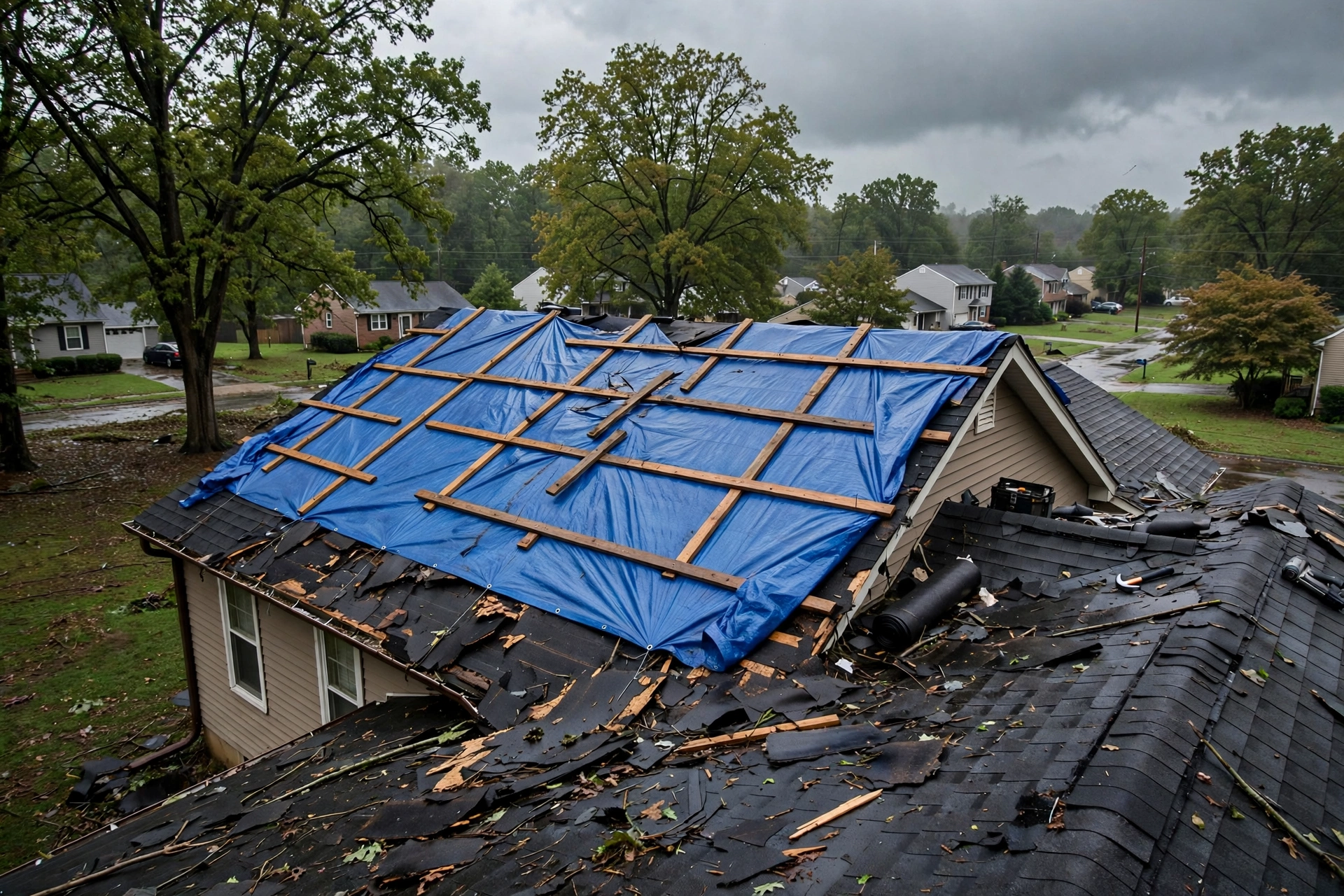
A roof leak is a plumbing problem wearing a disguise — the water shows up in one place, but the entry point is usually somewhere else entirely. Water travels along decking, down rafters, and through insulation before it finally drips onto your ceiling, which means the stain in the living room might trace back to a failed flashing ten feet away. Chasing the stain instead of the source is how leaks get 'repaired' three times.
We find the actual entry point: up on the roof tracing the water's path, in the attic reading the stains on the decking, at every flashing, vent, and penetration. Then we fix the source — failed flashing, cracked boot, compromised valley, damaged shingle — not just the symptom. And we verify with water testing when the situation calls for it, because a leak repair you can't prove is a leak repair you'll revisit.
If water is coming through your State College roof, call (555) 123-4567. We'll find where it's really getting in.
Signs your roof is leaking
- Water stains on ceilings or walls, new or growing
- Drips during or after rain — even small ones
- Musty smell in the attic or upper rooms
- Peeling paint or bubbling drywall near the ceiling
- Daylight visible through the roof boards in the attic
How we fix your roof leak
1 Trace the water's path
We start in the attic, reading stains on the decking and rafters to trace the leak uphill to its entry point. Water's path points back to the source — you just have to read it.
2 Inspect the suspect areas
Flashing at chimneys, walls, and valleys; vent boots; skylight curbs; the shingles above the stain line. Leaks concentrate at penetrations and transitions — that's where we look first and hardest.
3 Repair the source
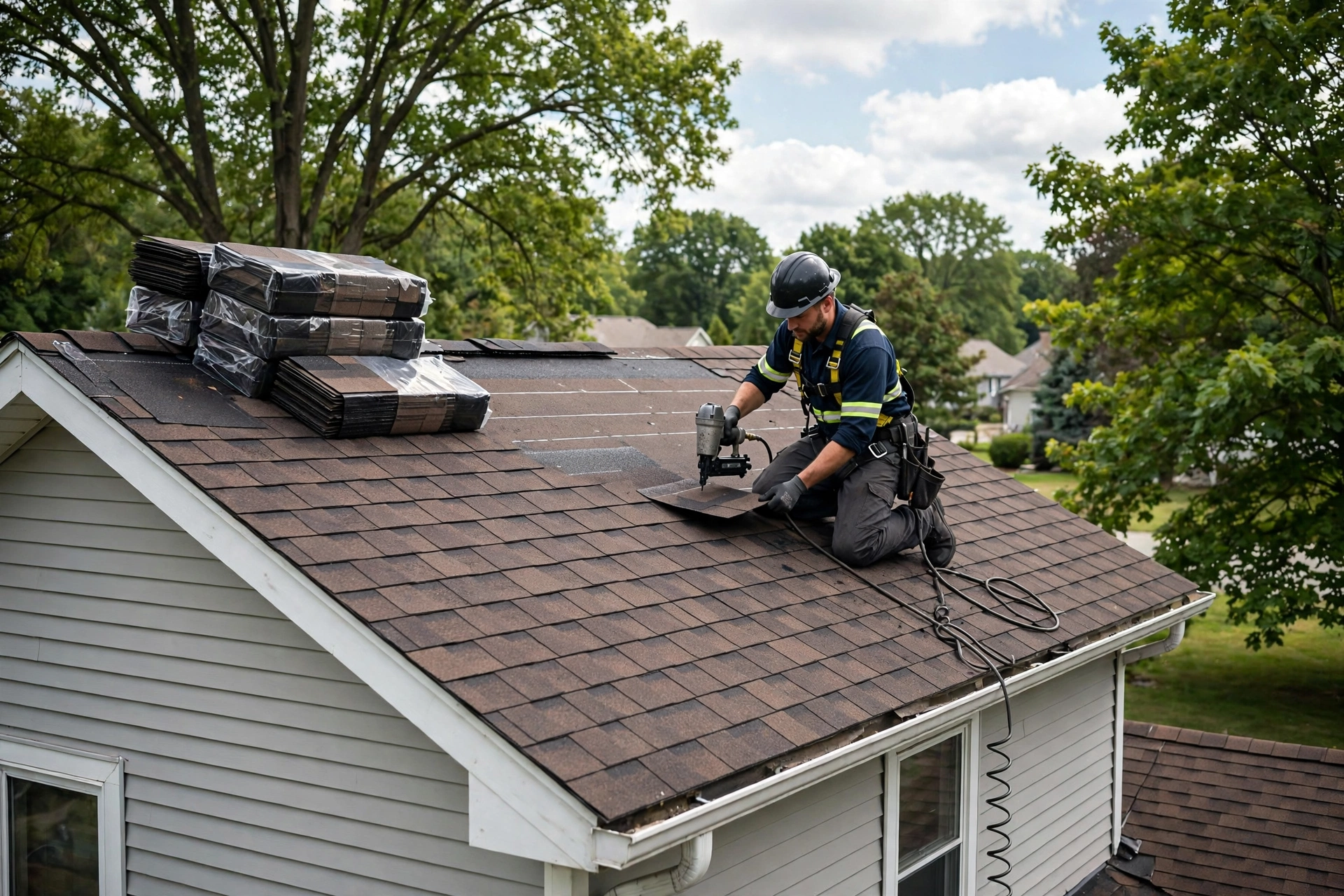
Failed flashing gets replaced, cracked boots get renewed, compromised shingles get swapped. We fix what's letting water in, not just what's showing the stain.
4 Verify it's dry
We water-test the repair when conditions allow and re-check the attic. A leak repair is done when the entry point is sealed and proven — not when the ceiling looks patched.
Roof leaks in State College homes
In State College, the leak calls follow the seasons. Spring: flashing that gave up after a winter of freeze-thaw cycling — expanding and contracting until the seal breaks at chimneys and valleys. Summer: wind-driven rain finding every lifted shingle edge from the last thunderstorm. Winter: ice dams backing meltwater under shingles on the older downtown homes with under-insulated attics — the classic college-town leak, showing up as a stain on a rental's ceiling in February. The housing mix matters: century-old homes near campus with original flashing that's aged out, 1970s ranches with valleys full of debris, newer builds with complex roof transitions. We trace every leak to its source instead of chasing the stain, because in State College the source is usually the last season's damage, not this week's rain.
Need roof leak repair in State College?
One call connects you with a local technician. No forms, no waiting.